The European Union's cybersecurity landscape changed permanently on January 17, 2023, when the directive entered into force, expanding coverage to 18 critical sectors and introducing penalties that can reach €10 million or 2% of global annual turnover for essential entities.
For critical infrastructure operators managing operational technology (OT) environments across multiple EU member states, this legislation represents both an enforcement reality and an operational efficiency opportunity.
Germany's BSI issued formal notices to 47 entities in Q4 2025 for non-compliance, demonstrating that regulators are actively enforcing the directive's requirements. Yet the same purpose-built OT security platforms that enable compliance also deliver significant reductions in audit preparation time and unified visibility across thousands of industrial control system devices.

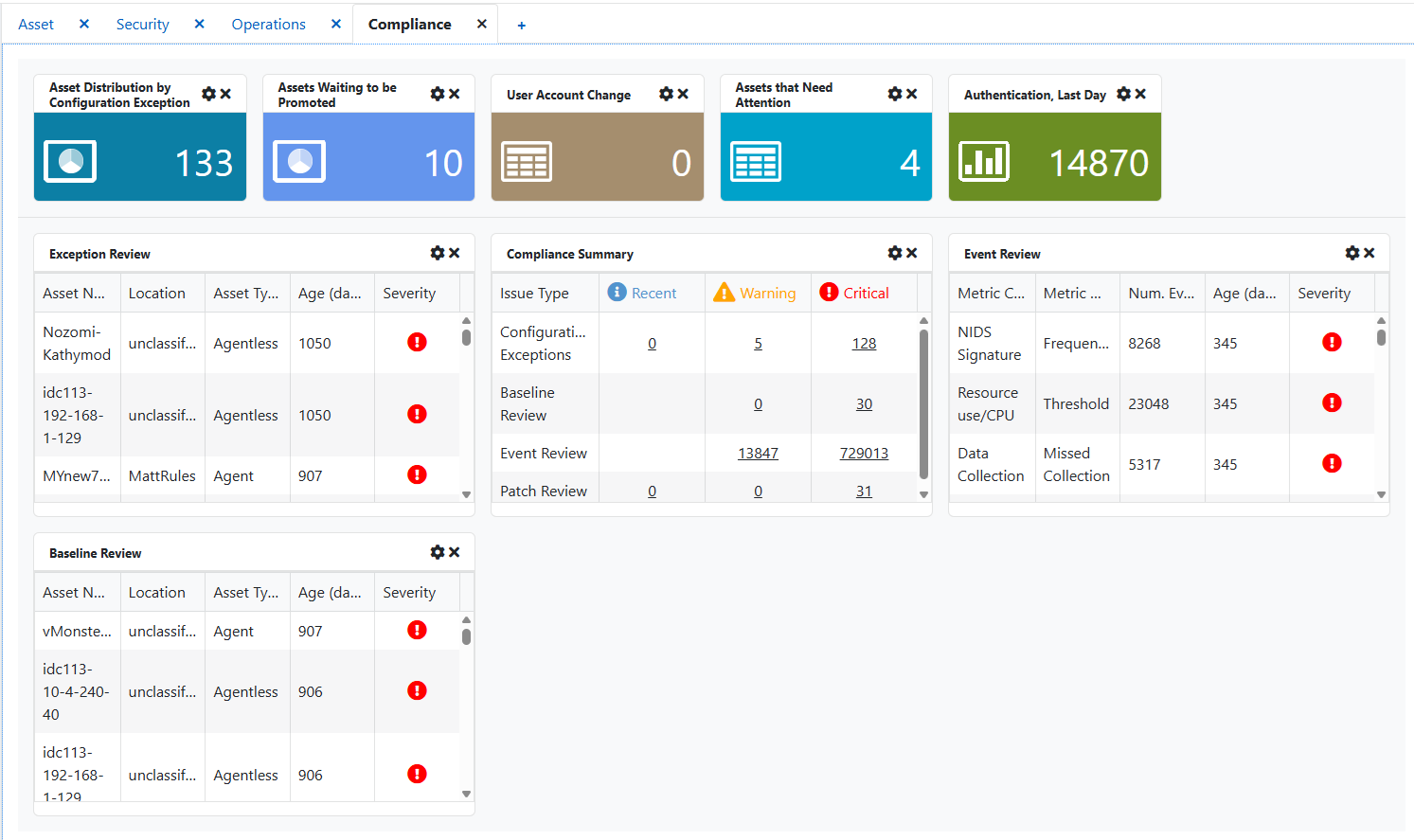
Industrial Defender provides a single, unified view of your OT environment, enabling teams to continuously monitor assets, detect risks, and generate compliance-ready reports aligned to NIS2 and IEC standards.

Automatically discover and inventory all assets across your environment
Identify anomalies, vulnerabilities, and configuration changes in real time
Generate audit-ready reports without manual effort

When a multi-national gas and electrical distribution company needed to comply with EU requirements while simultaneously meeting NERC CIP and IEC 62443 obligations across four countries, the challenge extended beyond regulatory complexity to operational scale. Managing 400+ sites with diverse OT environments, different vendors, and varying regional requirements demanded a centralized platform that could deliver unified compliance without creating separate security architectures for each jurisdiction.
The Multi-National Gas and Electrical Distribution Company case study demonstrates how purpose-built OT security platforms solve this challenge. By deploying Industrial Defender® across all 400+ sites with centralized management, the operator achieved multi-framework compliance from a single platform. The deployment configured multi-framework compliance mapping to simultaneously address Article 21 security measures, NERC CIP requirements, and IEC 62443 controls, eliminating the need for separate compliance workflows per jurisdiction.
This unified approach delivered three critical outcomes for EU cybersecurity compliance:
For critical infrastructure operators serving multiple EU markets, this architecture proves that compliance doesn't require building separate security infrastructures for each member state. The OT Asset Management Platform provides the single source of truth for asset data that Article 21 demands. At the same time, the Compliance Reporting Engine automatically maps controls across frameworks, transforming a multi-jurisdictional compliance challenge into a unified operational efficiency gain.
Multi-national critical infrastructure operators serving both EU and North American markets face a complex compliance challenge: EU requirements for European operations, NERC CIP compliance requirements for North American electric utilities, and IEC 62443 compliance for critical infrastructure as the global standard for industrial automation and control systems security. Building separate security architectures for each framework creates operational inefficiency, increases costs, and introduces inconsistencies in how different facilities implement security controls. Purpose-built OT platforms solve this challenge by providing unified compliance from a single architecture that maps controls across frameworks automatically.
The Multi-National Gas and Electrical Distribution Company case study demonstrates this unified approach at scale. Operating across 4 countries with 400+ sites, the operator needed to simultaneously meet EU requirements in member states, NERC CIP requirements for North American operations, and IEC 62443 controls as the technical security standard. Rather than deploying separate platforms for each framework, the centralized Industrial Defender deployment configured multi-framework compliance mapping that automatically generated audit-ready evidence for all three frameworks from the same underlying asset data and security monitoring.
This architecture delivers specific efficiency gains that transform compliance from a regulatory burden into an operational advantage:
For critical infrastructure operators, this unified approach delivers measurable efficiency gains by automating evidence collection that previously required manual documentation. When operators eliminate duplicate efforts across frameworks, the same asset data, configuration tracking, and security monitoring that meet one framework's requirements automatically satisfy others, they achieve significant time savings during audit preparation.
The technical foundation for unified compliance is a purpose-built OT architecture that understands industrial protocols, maintains deep-level asset data, and provides operationally safe monitoring. The Industrial Defender Collector deployed at each site collects the comprehensive device information that all three frameworks require: asset identification and classification, network communication patterns, configuration baselines, and security event logs. The Compliance Reporting Engine then maps this data to specific controls in Article 21, NERC CIP requirements, and IEC 62443 security levels, generating audit-ready documentation that meets each framework's evidence requirements without manual translation.
For critical infrastructure operators expanding into new markets or facing additional regulatory requirements, this unified architecture provides a scalable foundation. When the EU adopts new cybersecurity requirements or member states implement national variations, the same platform that delivers compliance can be configured to address new frameworks without architectural changes or separate security infrastructures.
.svg)

Article 21 mandates ten specific security measures that essential entities must implement, but the directive's language focuses on outcomes rather than prescriptive technical controls. For operational technology environments, translating these requirements into actionable security capabilities requires understanding how each measure maps to OT-specific architecture. Unlike IT security tools adapted for industrial use, purpose-built OT platforms deliver these capabilities without disrupting operational processes or creating safety risks.
Risk analysis and information system security policies begin with comprehensive OT asset visibility. The OT Asset Management Platform provides automated discovery and classification across PLCs, RTUs, HMIs, and other industrial control system devices, delivering the deep-level asset data that risk analysis requires. This goes beyond basic network scanning to include firmware versions, configuration files, communication protocols, and operational context, the foundation for understanding which assets are essential entities under the regulation and what security measures each requires.
Incident handling under the legislation demands capabilities that detect, analyze, and respond to cybersecurity events in operational technology environments. Active and Passive Monitoring combines passive traffic analysis with operationally safe active queries, providing continuous threat detection without disrupting industrial processes. When the Combined Cycle Power Plants Operator case study deployed this hybrid monitoring across 7 plants with 6,000+ endpoints, real-time alerting enabled rapid detection of unauthorized changes while maintaining the uptime requirements critical to power generation operations.
Business continuity and crisis management require configuration change management that tracks every modification to OT devices and provides rollback capabilities when incidents occur. For critical infrastructure operators, understanding what changed, when it changed, and who authorized the change becomes essential for both incident response and regulatory reporting. Purpose-built platforms maintain configuration baselines for every OT device, automatically detecting deviations and generating alerts that feed into both operational response workflows and incident reporting requirements.
Supply chain security extends beyond IT vendors to include industrial control system manufacturers, third-party maintenance providers, and OT device suppliers. Tracking third-party devices requires deep-level asset data collection that identifies every component's manufacturer, model, firmware version, and support status. When 58% of organisations subject to two or more reporting frameworks had not yet implemented a unified incident response workflow, the issue extended beyond technical challenges to architectural shortcomings. Purpose-built OT platforms provide the vendor risk assessment capabilities that the directive's supply chain security measures demand, automatically tracking which third-party devices are deployed, where they're located, and whether they're receiving security updates.
Security in network and information systems acquisition requires vendor risk assessment during procurement, but for OT environments, this extends to evaluating whether new devices will introduce vulnerabilities or compatibility issues into existing industrial control systems. The Industrial Defender Collector deployed at each site provides the continuous monitoring that validates whether newly acquired systems meet security requirements before they're integrated into production environments.
The remaining Article 21 measures, policies, and procedures to assess cybersecurity effectiveness, basic cyber hygiene practices and training, cryptography and encryption, human resources security, and access control policies all depend on having accurate, comprehensive OT asset data as their foundation. Without knowing what devices exist, what protocols they use, and what configurations they require, implementing these security measures becomes guesswork rather than systematic risk management.
Article 21's ten security measures apply to operational technology environments, but implementing these requirements with IT security tools adapted for industrial use creates fundamental gaps in both security effectiveness and operational safety. The distinction between purpose-built OT platforms and adapted IT tools becomes critical when essential and important entities need to meet compliance without disrupting critical infrastructure operations or introducing safety risks.
OT protocol awareness represents the first architectural difference. Industrial control systems communicate using specialized protocols, Modbus for manufacturing and building automation, DNP3 for electric utilities, IEC 61850 for substation automation, and BACnet for HVAC systems, which IT security tools don't natively understand. Without protocol-aware deep packet inspection, security monitoring cannot distinguish between normal operational commands and potentially malicious traffic. Purpose-built platforms provide native support for numerous industrial protocols out of the box, enabling the incident handling capabilities that Article 21 requires without generating false positives that overwhelm operational technology and teams.
Operationally safe active querying differentiates how purpose-built OT platforms collect asset data versus how IT security tools perform network scanning. Standard vulnerability scanners and asset discovery tools use aggressive scanning techniques that can disrupt or crash industrial devices, creating safety risks in operational environments. The Active and Passive Monitoring approach combines passive traffic analysis with carefully controlled active queries designed specifically for OT devices, providing comprehensive asset visibility without operational disruption. When the Combined Cycle Power Plants Operator case study deployed this hybrid monitoring across 7 plants with 6,000+ endpoints, the platform maintained uptime requirements while delivering the continuous monitoring that incident handling demands.
Deep-level asset data collection from PLCs, RTUs, and HMIs provides the comprehensive device information that Article 21's risk analysis and supply chain security measures require. IT asset management tools typically collect basic network information, IP addresses, MAC addresses, and open ports, but miss the operational context that OT security demands. Purpose-built platforms extract firmware versions, ladder logic programs, configuration files, I/O module details, and communication patterns, delivering the single source of truth for asset data that enables accurate risk assessment and vendor relationship tracking.
Configuration change management for OT devices requires understanding what constitutes a valid configuration versus an unauthorized modification. Industrial control systems have complex configuration parameters that control physical processes. Changing a setpoint, modifying a control loop, or updating ladder logic can impact safety systems and operational outcomes. Purpose-built platforms maintain configuration baselines for every OT device type, automatically detecting deviations and providing rollback capabilities that meet the directive's business continuity and crisis management requirements without creating operational risks.
The architectural foundation that Industrial Defender® provides reflects nearly two decades of OT-native design and deployment across numerous organizations in multiple countries. Rather than adapting IT security for industrial use, this solution was designed from the ground up to meet the unique requirements of operational technology environments. When critical infrastructure operators need to implement Article 21 security measures without disrupting essential services, the distinction between purpose-built OT platforms and adapted IT tools becomes the difference between compliance and operational risk.

Under the original directive, 68% of significant cybersecurity incidents affecting essential entities went unreported or were reported late, exposing a fundamental gap between regulatory requirements and operational reality. The problem wasn't that critical infrastructure operators ignored incidents, but that detecting, analyzing, and documenting OT security events required manual processes that couldn't meet reporting timelines. The updated legislation addresses this gap with stricter requirements: early warning within 24 hours of detection, incident notification within 72 hours, and a final report within one month. Meeting these timelines demands automated OT security monitoring that detects threats in real-time and generates audit-ready evidence without manual intervention.
The 24-hour early warning requirement creates particular challenges for operational technology environments. Unlike IT networks, where security information and event management (SIEM) systems aggregate logs from standardized endpoints, OT environments include diverse industrial protocols (Modbus, DNP3, IEC 61850, BACnet) that require protocol-aware monitoring. Purpose-built platforms like Active and Passive Monitoring combine passive traffic analysis with targeted active queries, providing the continuous visibility that enables rapid incident detection without disrupting industrial processes.
For the Clean Power Generation Provider case study, operating 3 facilities with 20,000+ assets, automated monitoring delivered real-time configuration change detection across all geographically distributed generation assets. When an unauthorized modification occurred, the platform immediately generated an alert with complete context: what changed, when it changed, which device was affected, and what the previous configuration was. This automated evidence collection transformed the 72-hour incident notification requirement from a manual documentation burden into an automated workflow that met Article 23 reporting obligations.
The one-month final report timeline requires a comprehensive incident analysis that includes root cause determination, impact assessment, and remediation actions taken. For cyber incident reporting requirements across multiple frameworks, maintaining separate documentation for each jurisdiction creates redundant work and increases the risk of inconsistent reporting. The Compliance Reporting Engine solves this challenge by automatically mapping incident data to multiple regulatory frameworks simultaneously, generating audit-ready reports that meet EU requirements while also satisfying NERC CIP, IEC 62443, or other applicable standards.
The statistic that 58% of organisations subject to two or more reporting frameworks had not yet implemented a unified incident response workflow reveals why so many entities struggled under the original directive. Without centralized OT security platforms that provide a single source of truth for asset data and security events, operators faced the impossible task of manually correlating information across disparate systems, analyzing incidents without complete context, and generating consistent reports for multiple regulators. Purpose-built OT platforms eliminate this gap by providing the automated monitoring, evidence collection, and reporting capabilities that incident timelines demand.
Under the original directive, 68% of significant cybersecurity incidents affecting essential entities went unreported or were reported late.

Automatically identify and inventory every device, system, and connection across your industrial environment.

Understand your current security state, gaps, and risk exposure relative to NIS2 and IEC requirements.

Detect anomalies, vulnerabilities, and configuration changes across your environment in real time.

Produce compliance documentation automatically, whenever you need it, without manual effort.

When Germany's BSI issued formal notices to 47 entities in Q4 2025 for non-compliance, the message to critical infrastructure operators across the EU became clear: regulators are actively enforcing the directive's requirements, and penalties for non-compliance carry serious financial consequences. Essential entities face fines of up to €10 million or 2% of global annual turnover, whichever is higher, while important entities face fines of up to €7 million or 1.4% of global annual turnover. For multi-national operators with significant revenue, the percentage-based provision can result in penalties that dwarf the fixed monetary amounts, making compliance not just a regulatory obligation but a fundamental business continuity requirement.
These penalties are more than a regulatory risk. They underscore the operational and financial consequences of inadequate OT security. When critical infrastructure operators lack comprehensive asset visibility, they cannot implement the risk analysis and security policies that Article 21 requires. When they rely on manual processes for incident detection and reporting, they miss the 24-hour early warning and 72-hour notification timelines that regulators enforce. The formal notices issued by Germany's BSI demonstrate that member state authorities are monitoring compliance actively and taking enforcement action when entities fail to meet requirements.
The return on investment for automated compliance platforms becomes clear when compared against penalty exposure. The Clean Power Generation Provider case study achieved compliance across 3 facilities with 20,000+ assets, with compliance reporting time reduced significantly through automation. For critical infrastructure operators, reducing OT security audit preparation time through automated evidence collection translated directly to operational efficiency gains that justified platform investment independent of penalty avoidance. When operators implement purpose-built OT security platforms, the time savings alone can exceed the cost of the technology.
Framing EU cybersecurity compliance as operational risk management rather than regulatory burden reveals the business case for automated platforms. Essential entities that implement comprehensive OT security capabilities gain:
The enforcement landscape established by Germany's BSI and other member state authorities demonstrates that penalties are not theoretical risks. They are operational realities that critical infrastructure operators must address through systematic security measures and automated compliance capabilities.
Industrial Defender provides a single, unified view of your OT environment, enabling teams to continuously monitor assets, detect changes, and generate audit-ready evidence reports aligned to the frameworks you're held to. No custom coding. No spreadsheets. No site walk-downs.

Automatically discover and inventory all assets across your environment

Identify anomalies, vulnerabilities, and configuration changes in real time

Generate audit-ready reports without manual effort

Prioritize what matters most across your infrastructure
Reduction in compliance reporting time
North American operators served
Regulatory frameworks mapped
The legislation is the European Union's comprehensive cybersecurity framework that entered into force on January 17, 2023, expanding coverage to 18 critical sectors, including energy, transport, banking, health, water, and digital infrastructure. Essential entities (large organizations providing critical services) and important entities (medium-sized organizations in covered sectors) must implement Article 21's ten security measures and meet strict incident reporting timelines. The regulation applies to entities with specific employee counts or annual turnover thresholds, though smaller firms providing critical services may also fall under the scope.
Essential entities face fines of up to €10 million or 2% of global annual turnover, whichever is higher, while important entities face fines of up to €7 million or 1.4% of global annual turnover. Germany's BSI issued formal notices to 47 entities in Q4 2025 for non-compliance, demonstrating that member state authorities are actively enforcing requirements. Beyond financial penalties, non-compliance can result in operational restrictions, management liability, and reputational damage that impacts business continuity for critical infrastructure operators.
The EU regulation is a mandatory cybersecurity requirement for essential entities, while NERC CIP compliance requirements apply specifically to North American bulk electric system operators, and IEC 62443 compliance for critical infrastructure provides a global technical standard for industrial automation and control systems security. Purpose-built OT platforms enable unified compliance across all three frameworks from a single architecture, with the Multi-National Gas and Electrical Distribution Company case study demonstrating simultaneous compliance across 400+ sites in 4 countries. The key difference is jurisdictional scope and specific control requirements, but all three frameworks share common foundations in asset management, configuration control, and incident response.
Article 23 requires early warning to authorities within 24 hours of detecting a significant incident, followed by an initial incident notification within 72 hours, and a detailed final report within one month. These strict timelines necessitate automated OT security monitoring that detects threats in real-time and generates audit-ready evidence without manual intervention. Under the original directive, 68% of significant cybersecurity incidents affecting essential entities went unreported or were reported late, highlighting why automated platforms are essential for meeting the updated requirements.
Purpose-built OT platforms automate compliance by providing comprehensive asset discovery, continuous security monitoring, configuration change management, and automated compliance reporting from a single architecture designed specifically for operational technology environments. The OT Asset Management Platform delivers the asset inventory and risk analysis that Article 21 requires, while Active and Passive Monitoring provide the incident handling capabilities that meet 24-hour early warning timelines. The Compliance Reporting Engine automatically maps security controls to regulatory requirements, generating audit-ready documentation that demonstrates compliance across all ten Article 21 security measures while reducing audit preparation time compared to manual processes.


