The European Union's NIS2 Directive is expanding cybersecurity requirements to more than 200,000 organizations. For critical infrastructure operators, this creates a new reality: traditional IT security strategies are no longer enough.
Power generation facilities, water utilities, manufacturing plants, and oil and gas operators need continuous OT security monitoring that meets evolving regulatory requirements while keeping essential operations running without interruption.


Operators across energy, manufacturing, water, oil & gas, chemical, and other critical infrastructure run dozens of sites, plants, and facilities — each with PLCs, RTUs, HMIs, and relay gateways from multiple vendors.
Legacy infrastructure, segmented networks, and constantly changing standards make it nearly impossible to maintain a current, accurate picture of your OT environment.
That complexity creates evidence gaps, inconsistent reporting, and audit findings that cost time and credibility.
You're responsible for proving compliance across assets you can't always see — and the standards keep changing.


With regulatory oversight intensifying across every critical infrastructure sector, the cost of manual, reactive compliance continues to rise.
Industrial Defender provides a single, unified view of your OT environment, enabling teams to continuously monitor assets, detect risks, and generate compliance-ready reports aligned to NIS2 and IEC standards.

Automatically discover and inventory all assets across your environment

Identify anomalies, vulnerabilities, and configuration changes in real time

Generate audit-ready reports without manual effort

Prioritize what matters most across your infrastructure
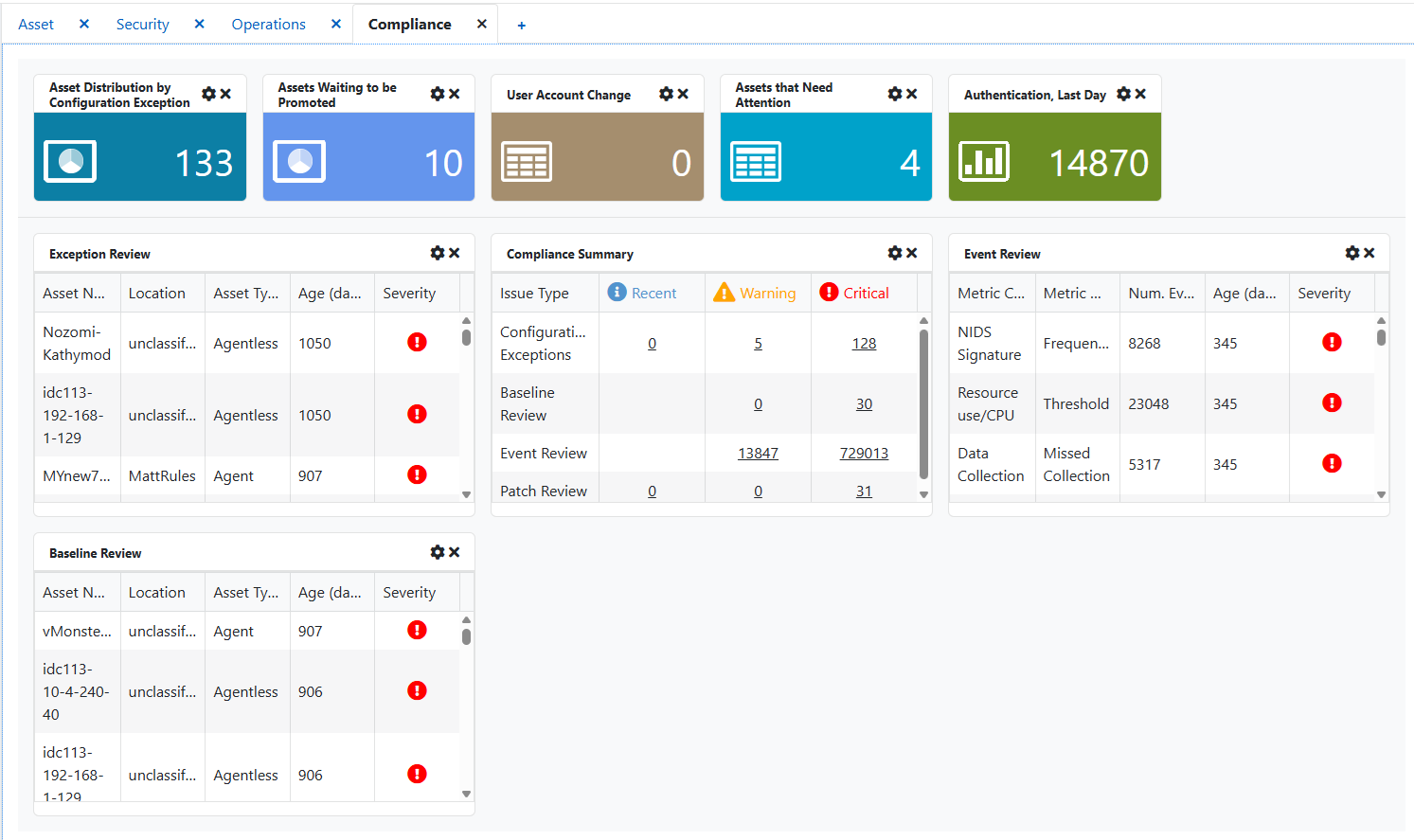
Reduction in compliance effort
Visibility across distributed environments
IEC 62443, ISO 27001 aligned

Automatically identify and inventory every device, system, and connection across your industrial environment.

Understand your current security state, gaps, and risk exposure relative to NIS2 and IEC requirements.

Detect anomalies, vulnerabilities, and configuration changes across your environment in real time.

Produce compliance documentation automatically, whenever you need it, without manual effort.
.svg)
Get a complete, audit-ready view of your OT assets, your compliance gaps, and how to close them — built to the standard set by North America's electric grid, and proven across essential industries. Protect your devices, your operations and your reputation with the finest asset intelligence monitoring available.


NIS2 classifies organizations into two categories: essential entities, which face the highest compliance obligations and penalties, and important entities, which are subject to lighter supervision. Essential entities are exposed to maximum fines of €10 million or 2% of global annual turnover, whichever is higher.
Essential entities include operators in 11 highly critical sectors: energy, transport, banking, financial market infrastructures, health, drinking water, wastewater, digital infrastructure, public administration, and space. Seven additional sectors are covered, including postal and courier services, waste management, manufacturing of critical products, chemical production and distribution, food production and distribution, manufacturing of medical devices, and digital providers.
Sector classification matters for OT security implementation. Combined-cycle plants, nuclear reactors, and renewable installations fall squarely into the essential-entity category. Water and wastewater utilities managing SCADA systems face essential entity obligations. Industrial Defender has deployed OT security across these exact sectors, with the Chemical Processing Company case study demonstrating continuous monitoring of 50,000+ OT/ICS assets spanning multiple facilities.
For multi-national operators, classification must be determined in each member state. A power generation company with facilities in Germany, France, and Poland faces classification under three national implementations of NIS2. The cybersecurity in critical infrastructure market was valued at USD 21.60 billion in 2023 and is projected to reach USD 30.96 billion by 2032, correlating directly with NIS2's extension of coverage to over 200,000 organizations.
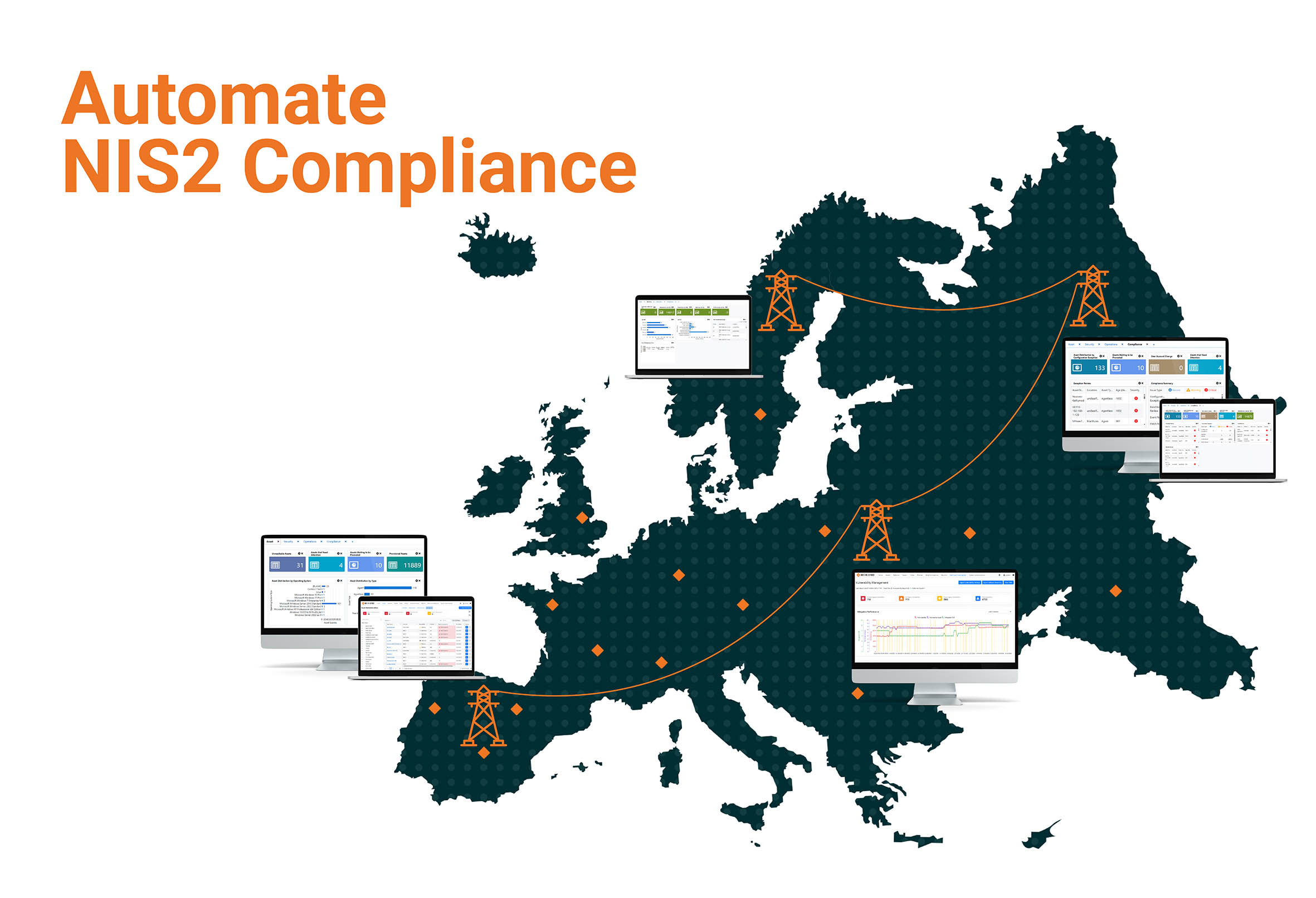
The original NIS Directive revealed a fundamental problem: 68% of significant cybersecurity incidents affecting essential entities went unreported or were reported late. Organizations lacked the continuous monitoring to detect incidents in SCADA systems, distributed control systems, and industrial networks where IT-focused monitoring provides no visibility.
NIS2 addresses this gap through strict timelines. Essential entities must provide an early warning within 24 hours of becoming aware of a significant incident, submit a notification within 72 hours, and deliver a final report within one month. These requirements assume monitoring that detects configuration changes, unauthorized access, and anomalous behavior in real time rather than weeks later during scheduled maintenance.
The challenge intensifies in OT environments where safety-critical systems cannot tolerate intrusive scanning. A water treatment facility cannot risk SCADA interruption to install endpoint software. Active and Passive Monitoring answers this through a hybrid approach: passive analysis of Modbus, DNP3, IEC 61850, and OPC traffic without generating any operational impact, paired with targeted active queries on controlled schedules to collect firmware versions, configuration states, and security settings.
The 72-hour notification must include incident type, affected systems, geographical scope, and preliminary impact analysis. Manual documentation cannot meet this timeline while teams contain and remediate. Continuous evidence collection across asset inventory, network topology, and change logs provides the foundation for rapid incident documentation. Explore implementing NIS2 compliance for OT operators.

NIS2 transforms compliance from a documentation exercise into a regulatory obligation with severe consequences. Essential entities face administrative fines up to €10 million or 2% of global annual turnover, whichever is higher, while important entities face substantial fines for non-compliance.
The enforcement regime extends beyond financial penalties to binding instructions, periodic security audits, on-site inspections, and public disclosure of non-compliance. Active enforcement has begun, with Germany's BSI issuing formal notices to 47 entities in Q4 2025 for non-compliance. These notices signal that enforcement will focus on verifiable technical controls rather than accepting documentation at face value.
Member states were required to transpose NIS2 into national law by October 17, 2024, with organizations required to register with national authorities by April 17, 2025. Inspectors can demand access to OT networks, review asset inventories, examine configuration management records, and test incident detection capabilities. Manual spreadsheets updated quarterly will not satisfy inspectors when the regulation requires continuous monitoring.
Compliance automation directly mitigates enforcement risk. Applying the same methodology used to achieve NERC CIP compliance across 100+ substations and 20,000+ devices with audit preparation reduced from weeks to days, continuous asset monitoring, automated change detection, and real-time evidence collection transfer directly to NIS2 critical infrastructure requirements. Review the NIS2 critical infrastructure protection guide for detail.
NIS2 mandates 24-hour early warning and 72-hour incident notification, addressing the problem that 68% of significant cybersecurity incidents affecting essential entities went unreported or were reported late under the original NIS Directive

NIS2 Article 21 specifies ten categories of technical and organizational measures. Comprehensive asset inventory, network segmentation, access control, configuration management, and patch management demand approaches designed for industrial control systems rather than adapted from IT practices.
Asset inventory forms the foundation of NIS2 compliance, yet traditional IT discovery tools fail in OT environments. Active scanning that works for enterprise networks can disrupt SCADA communications, crash legacy PLCs, or trigger safety shutdowns. The OT Asset Management Platform addresses this through multiple discovery methods:
Network segmentation requires visibility into actual topology and communication patterns to distinguish legitimate cross-boundary traffic from unauthorized connections. Configuration change management demands continuous monitoring that detects modifications in near real time rather than discovering them during quarterly audits. Patch management requires risk-based prioritization that balances remediation against the operational continuity of devices that run for months or years between shutdowns.
These requirements form an implementation roadmap: asset discovery, network mapping, configuration baselining, continuous monitoring, and compliance reporting. This phased approach lets organizations demonstrate incremental progress during supervisory authority inspections while building toward full compliance.
Industrial Defender provides a single, unified view of your OT environment, enabling teams to continuously monitor assets, detect risks, and generate compliance-ready reports aligned to NIS2 and IEC standards.
Automatically discover and inventory all assets across your environment
Identify anomalies, vulnerabilities, and configuration changes in real time
Generate audit-ready reports without manual effort
Prioritize what matters most across your infrastructure
Member states were required to transpose NIS2 into national law by October 17, 2024, with organizations required to register with national authorities by April 17, 2025. Essential entities in energy, transport, water, manufacturing, and other critical sectors must implement required cybersecurity measures immediately, and supervisory authorities are already conducting inspections and issuing non-compliance notices. Organizations should verify their classification status with their national competent authority and ensure registration is complete to avoid enforcement actions.
NIS2 classifies power generation facilities and water utilities as essential entities subject to the highest compliance obligations and penalties. These organizations must implement comprehensive OT asset inventory, network segmentation between IT and OT environments, configuration change management for SCADA and industrial control devices, continuous monitoring for incident detection, and 24-hour early warning notification for significant incidents. The technical requirements demand purpose-built OT security approaches rather than adapted IT tools, since traditional scanning and agent-based monitoring can disrupt safety-critical control systems.
Essential entities in the energy sector face administrative fines up to €10 million or 2% of global annual turnover, whichever is higher, for NIS2 violations, while important entities face substantial fines. Beyond financial penalties, supervisory authorities can issue binding instructions, mandate external audits at the organization's expense, conduct on-site inspections, and publicly disclose violations. Germany's BSI has already issued formal notices to 47 entities for non-compliance, demonstrating that enforcement is active.
Automated incident reporting for SCADA systems requires continuous monitoring that detects configuration changes, unauthorized access, and protocol anomalies in real time rather than during periodic audits. Hybrid monitoring combining passive network traffic analysis with targeted active queries provides the necessary visibility without disrupting operations. When a significant incident occurs, automated evidence collection maintains asset inventory, configuration baselines, change logs, and access records that enable rapid compilation of the 72-hour incident notification.
Essential entities operate in 11 highly critical sectors including energy, transport, banking, health, drinking water, wastewater, and digital infrastructure, facing maximum fines of €10 million or 2% of global turnover. Important entities operate in seven additional sectors including postal services, waste management, manufacturing, chemical production, and food distribution, facing substantial fines for non-compliance. Classification depends on sector, size thresholds, and criticality assessment; medium and large entities automatically qualify if they operate in covered sectors, while small entities may qualify based on national authority determination.


