Ransomware attacks against manufacturers surged 56% in 2025. IBM ranked manufacturing the most-targeted sector three years running. Yet most plant floors still lack the basic asset visibility needed to detect or recover from an attack.


Trusted by manufacturers and critical infrastructure operators across aerospace, chemicals, defense, food & beverage, and industrial machinery since 2006.
Across the largest U.S. manufacturers, cybersecurity risk is now a standard material disclosure in annual 10-K filings. But disclosure is not protection. The gap between what leadership reports to shareholders and what security teams can actually see on the plant floor is where attackers live.
Confirmed incidents include:

36% of all cyberattacks globally targeted the manufacturing sector in 2024 (Bitsight)
56% surge in ransomware attacks against manufacturers in 2025 (Check Point)
Average ransomeware demand: $1.16M - double the prior year.
The majority of manufacturing firms still carry critical vulnerabilities in legacy OT systems
40% rise in internet-exposed ICS devices between 2024 and 2025 (CISA/SOCRadar)
$329.5B in industrial losses modeled in a single quarter of OT attack scenarios (DeNexus, Q3 2025)

A ransomware attack on Collins Aerospace (RTX subsidiary) in September 2025 that grounded flights across European airports.
Hasbro, one of the nation’s largest toy manufacturers, disclosed a cyberattack that may cause product delays for several weeks, according to an SEC filing.
Jaguar Land Rover (JLR) suffered a devastating cyberattack that halted production across its UK factories for five weeks, starting in August 2025. The incident, which caused significant data breaches and supply chain disruption, is considered the costliest and most economically damaging hack in British history, costing the UK economy an estimated £1.9 billion
Many post-incident investigations in industrial environments reach the same conclusion: the breach exploited assets that security teams didn't know existed, configurations that had drifted from baseline, or changes that were never documented.
The problem isn't detection; it's the absence of a complete, current picture of what's on the plant floor and what state it's in.
Passive-only OT monitoring tools — the category dominated by point solutions — capture what they can observe on the network. They miss devices that aren't communicating.
They miss configuration details that don't transmit across the network. They miss the changes that happened between scans.
And they produce asset inventories that look comprehensive but fail when an auditor or an incident responder needs to know the firmware version on a specific PLC, the firewall rules on a particular workstation, or when a software package was last modified.
This is the gap that Industrial Defender was built to address—and it has battle-tested solutions to address this challenge.
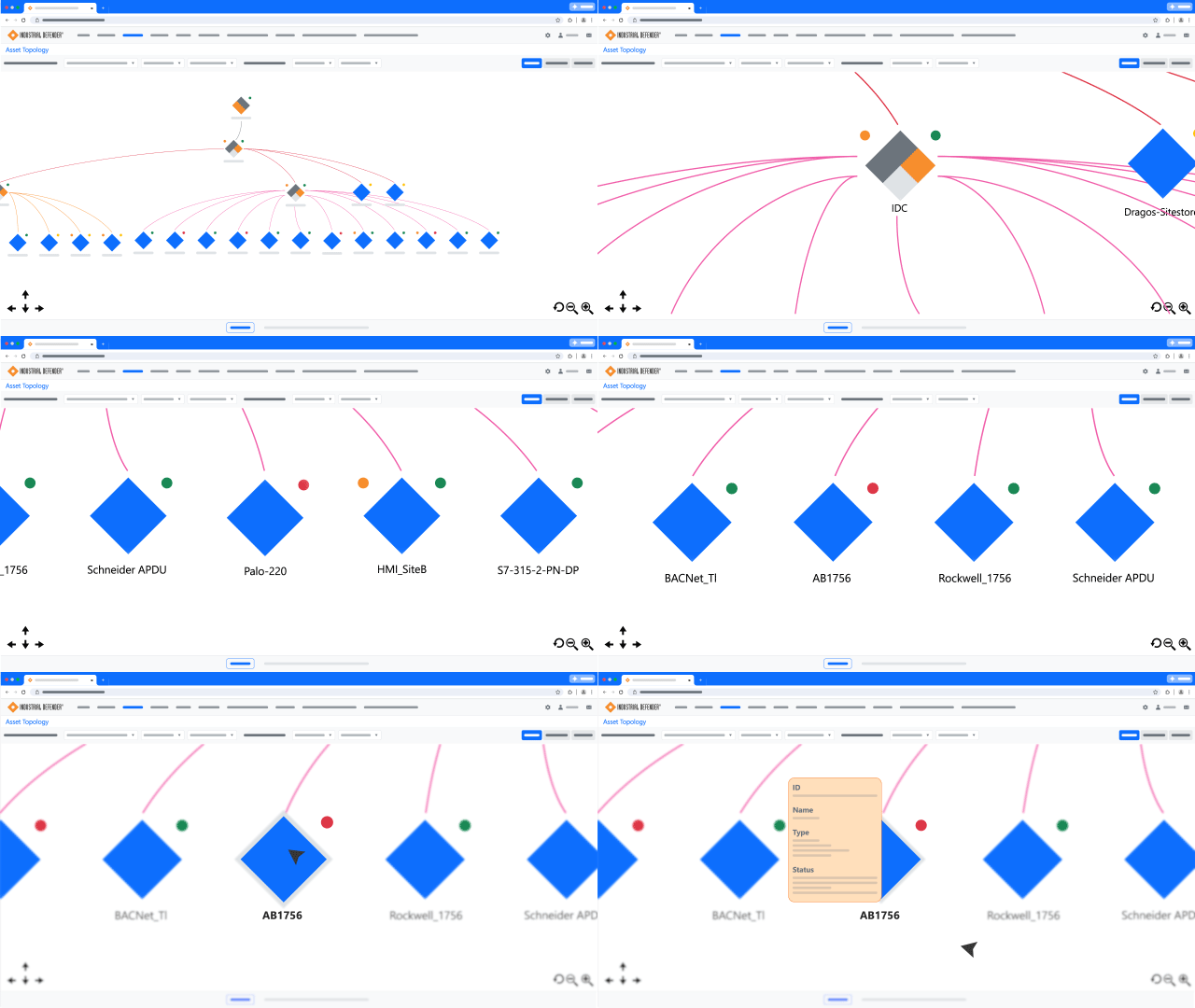
Industrial Defender combines active data collection (via SSH and native OT protocols at Purdue Level 1 and above) with passive network monitoring to deliver the most complete OT asset inventory available.
Where passive-only tools see traffic, Industrial Defender also queries devices directly — capturing OS details, installed software, patch levels, firmware versions, firewall rules, user accounts, and network interface configurations that passive monitoring simply cannot reach.
The result is an asset inventory that doesn't just list devices—it documents their state, tracks changes against baseline, and generates the audit-ready evidence your compliance and security teams need.
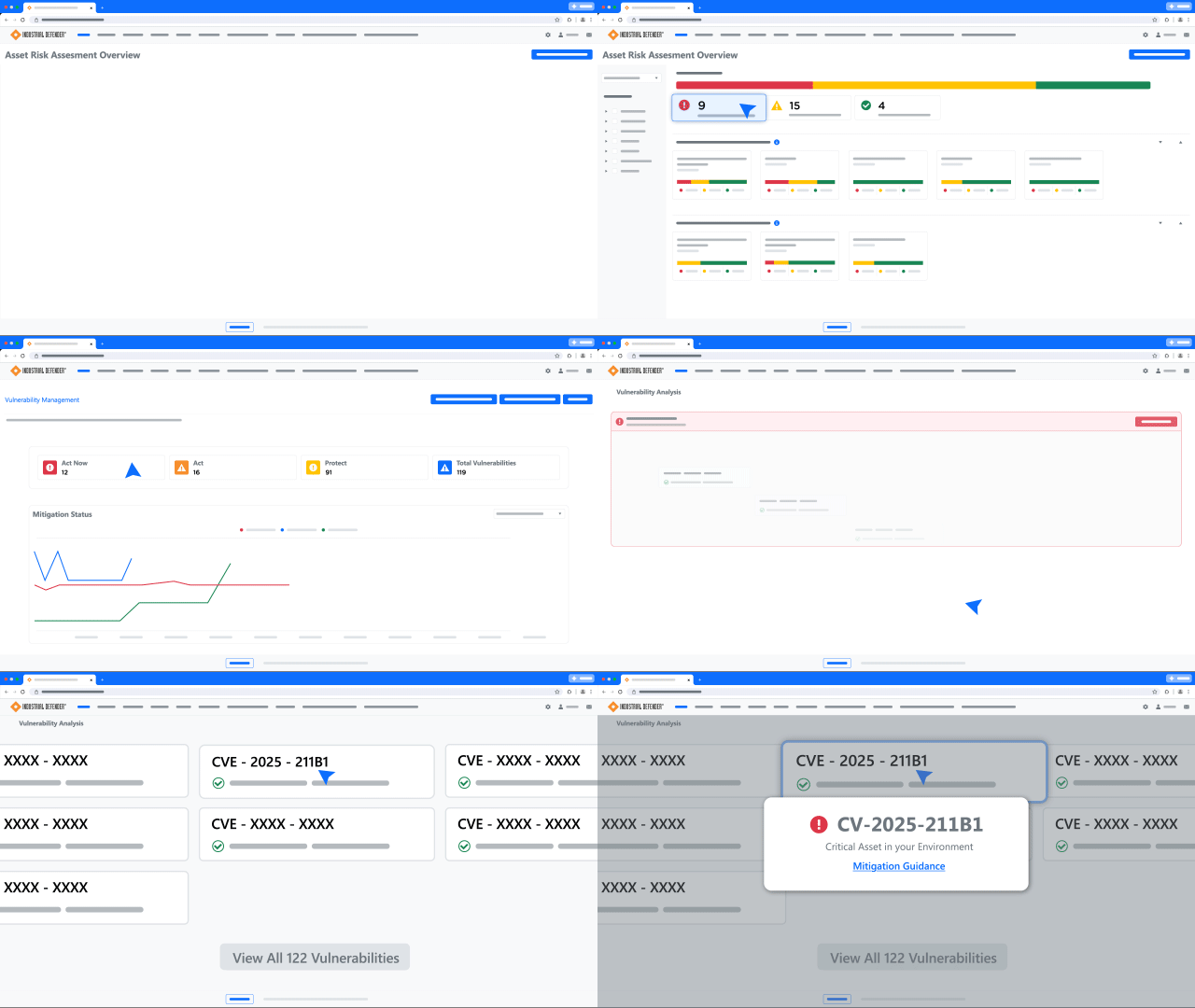
Complete hardware and software inventory across all OT endpoints. Active + passive collection. No gaps from non-communicating devices.
Firmware and software version tracking. Baseline configuration monitoring. Change detection with authorization workflow. CVE cross-reference.
Pre-built reports for IEC 62443, NIST CSF, NERC CIP, CMMC, CFATS, TSA Security Directives, and more. Audit-ready evidence collection.
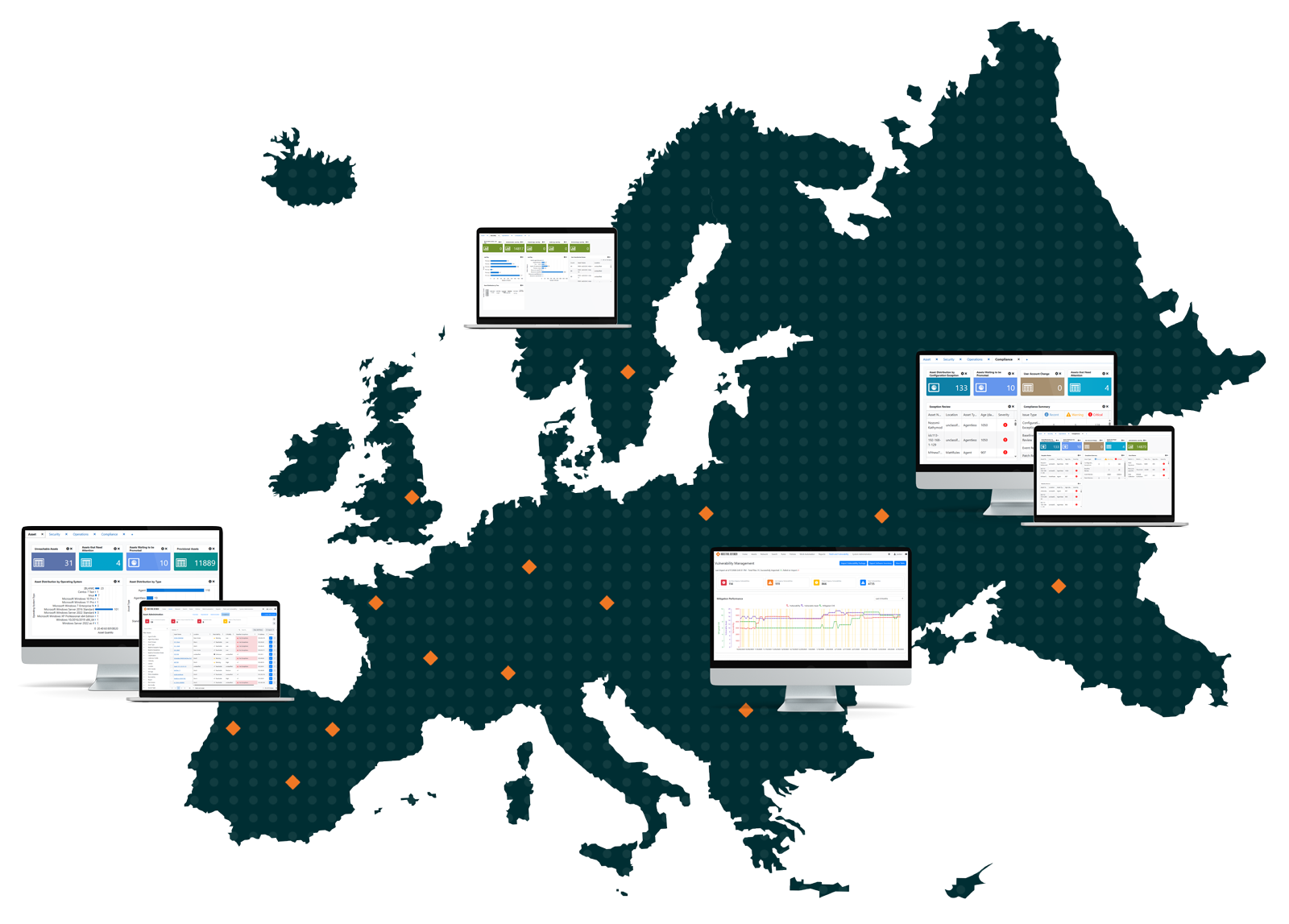
Depending on your industry, OT cybersecurity is no longer optional.
Manufacturers operating across defense, chemical, pharmaceutical, rail, or food sectors face specific regulatory mandates that benefit from documented OT asset visibility, configuration change control, and audit-ready evidence.

Similar but not identical passive monitoring tools give you what's on the wire.
They don't inform you of what's on the device—firmware versions, installed software, firewall rules, user accounts, and inactive credentials.
That distinction matters for compliance frameworks like NERC CIP, CMMC, and IEC 62443 that require endpoint-level evidence, not just network traffic analysis.
Industrial Defender has been safely using active OT device communication—via SSH and native industrial protocols at Purdue Level 1 and above—since 2006.
Where others see the network, we see the endpoint.
And we do it without disrupting your operations.
Request a 30-minute demo. We'll walk through how Industrial Defender builds a complete OT asset inventory for your environment, active and passive, compliant and operational.
Learn how Industrial Defender secured an advanced metering infrastructure (AMI) project for a large power company.
Case study


