When your operation produces 2 billion standard cubic feet of natural gas every single day, a blind spot in your OT environment isn't a compliance gap — it's an operational risk you can't afford. This is how one of the region's largest natural gas producers achieved full-spectrum visibility across every Purdue level using Industrial Defender.

.svg)
Industrial Defender's detailed compliance reports are absolutely music to my ears and make my day.
One of the largest natural gas producers in the Gulf region manages the full value chain of natural gas — production, processing, and pipeline transportation — across a multi-vendor OT/ICS estate built on more than $7 billion of investment and two decades of operations.
Faced with growing global connectivity, sophisticated threats targeting industrial control systems, and a tightening regulatory mandate, leadership needed a unified way to secure every Purdue level without disrupting production. The company selected Industrial Defender to deliver hybrid asset data collection, endpoint and network monitoring, configuration baselining, and audit-ready compliance reporting — all on a single platform.

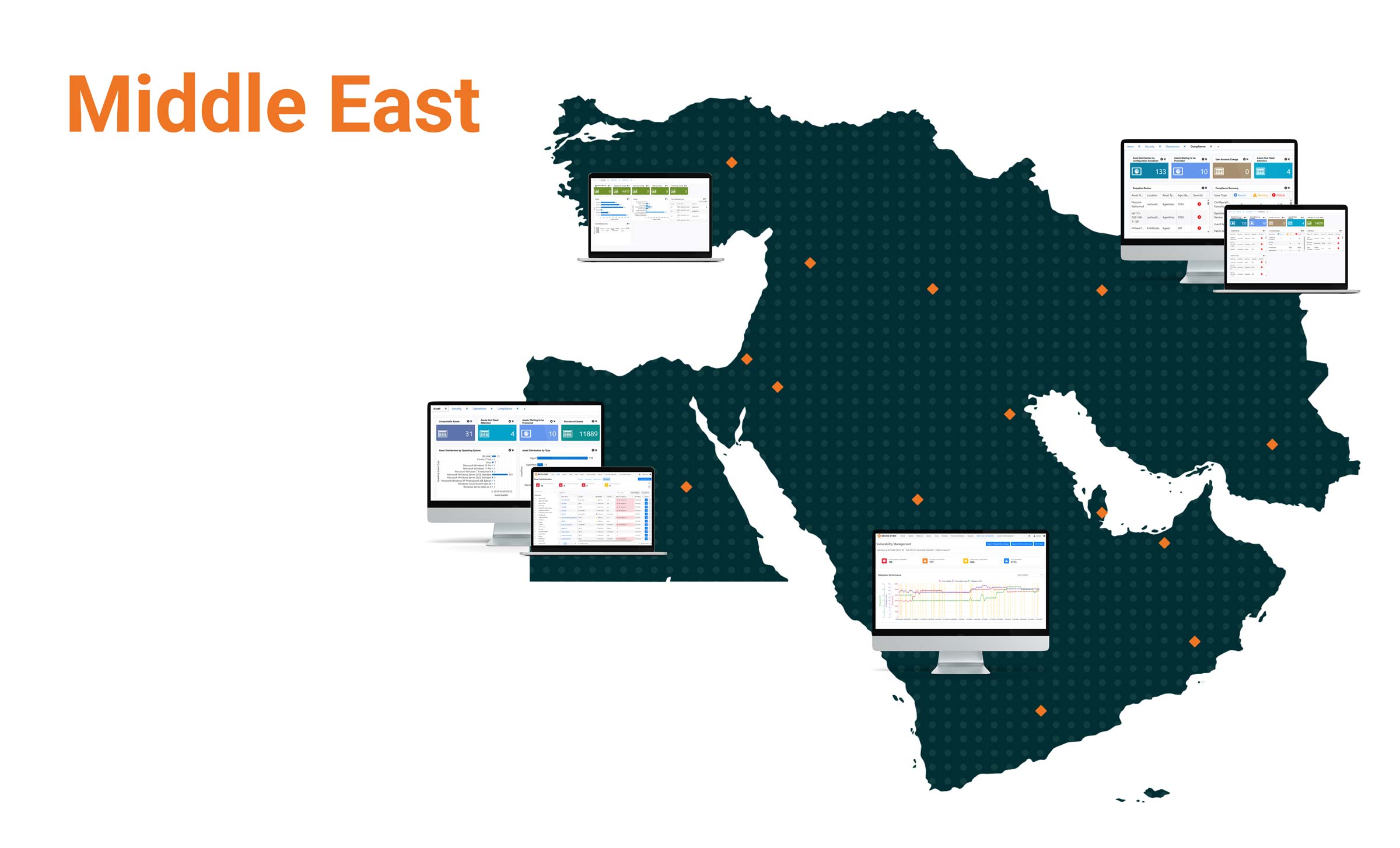
Increased global connectivity and a surge in sophisticated threats targeting industrial control systems prompted the company's leadership to take action. A growing raft of regulatory requirements added urgency for oil and gas operators to harden their ICS environments.
The existing approach left critical gaps across hardware, software, and event data — and any new solution had to integrate with existing SIEMs and log managers without disrupting production.

Combine agent-based, agentless, and network traffic analysis methods to cover endpoints, OT devices, and process control network traffic without forcing a single collection model onto a mixed environment.
Deliver configuration change management, event correlation, and patch management across every Purdue level — from Level 4 enterprise systems down to Level 1 PLCs and RTUs.
Integrate with existing SIEMs and log managers across a multi-vendor estate and stand the platform up without taking production offline.
The company implemented Industrial Defender as a single, unified platform for OT cyber asset and security event management — choosing it over stitched-together point solutions because it could collect data from both endpoint devices and process control network traffic, and transform that data into actionable intelligence.
Industrial Defender's combination of agent-based, agentless, and Network Traffic Analysis collection methods proved decisive — covering every corner of a multi-vendor estate where no single method works everywhere.
Agent-based collectors provided deep telemetry on Windows, Linux, and Unix systems, surfacing configuration data, software inventory, and security state information from endpoints across the environment.
Agentless collectors communicated directly with OT devices via native protocols — Modbus, DNP3, SSH, and SNMP — reaching PLCs, RTUs, and SCADA systems that traditional IT security tools cannot.
Passive Network Traffic Analysis completed the picture with visibility into communication patterns across the security network, complementing the active device communication at Levels 1 and above.
Active OT device communication at Purdue Level 1 and above — operationally safe since 2006 — surfaced configuration depth that passive-only solutions cannot match, including data that never appears on the wire.
A single platform now manages and monitors servers, workstations, network equipment, IT/OT networks across upstream/midstream/downstream operations, control system data centers, safety information systems, and physical security systems.
The Industrial Defender platform enables organizations to strengthen cybersecurity across multiple domains.

Together, these capabilities created a unified OT cybersecurity platform — delivering continuous visibility, automated monitoring, and audit-ready compliance across the utility's entire operational environment.
A continuously maintained hardware and software inventory now spans every endpoint — including versions, patch status, and known vulnerabilities. Configuration data covers ports and services, installed software, audit settings, and firewall rules, enabling least-functionality enforcement across the environment. The NetFlow visualization feature flags abnormal communication patterns before they escalate.
Firewall rules on both network segmentation devices and individual endpoints are monitored in real time for unauthorized changes. User accounts — with privilege levels and credentials — are extracted into audit-ready lists from every endpoint, and removable media usage is tracked and logged.
Security and performance data from all endpoints is captured and normalized into a unified event stream. Network traffic is inspected using deep-packet analysis and signature-based detection. Logic and correlation rules assign priority to significant events and trigger immediate email alerts to process control engineers and cybersecurity analysts, with compliance reports delivered automatically on subscription.
Out-of-the-box categorical summary reports align to best-practice standards and regulatory guidelines. The Industrial Defender policy engine surfaces settings, software, firewall configurations, and user accounts that fall outside corporate policy — giving auditors the evidence they need without manual data collection.
Industrial Defender's asset inventory, configuration baselining, vulnerability visibility, OT network monitoring, and syslog-based SIEM/SOAR forwarding map directly to the NCSC's National Basic Cybersecurity Controls — providing the audit-ready evidence regulated entities must demonstrate to NCSC upon request.
Vendor-agnostic deployment across DCS, SCADA, and PLC environments with no production interruption and no control-system shutdown required.
This deployment pattern applies to any oil and gas, energy, or critical infrastructure operator running a complex, multi-vendor OT estate under tightening regulatory scrutiny — where blind spots aren't just compliance findings, but operational risks.
The Compliance Dashboard provides real-time visibility into your compliance status across supported frameworks, helping teams track adherence, identify gaps, and prepare for audits without manual effort.
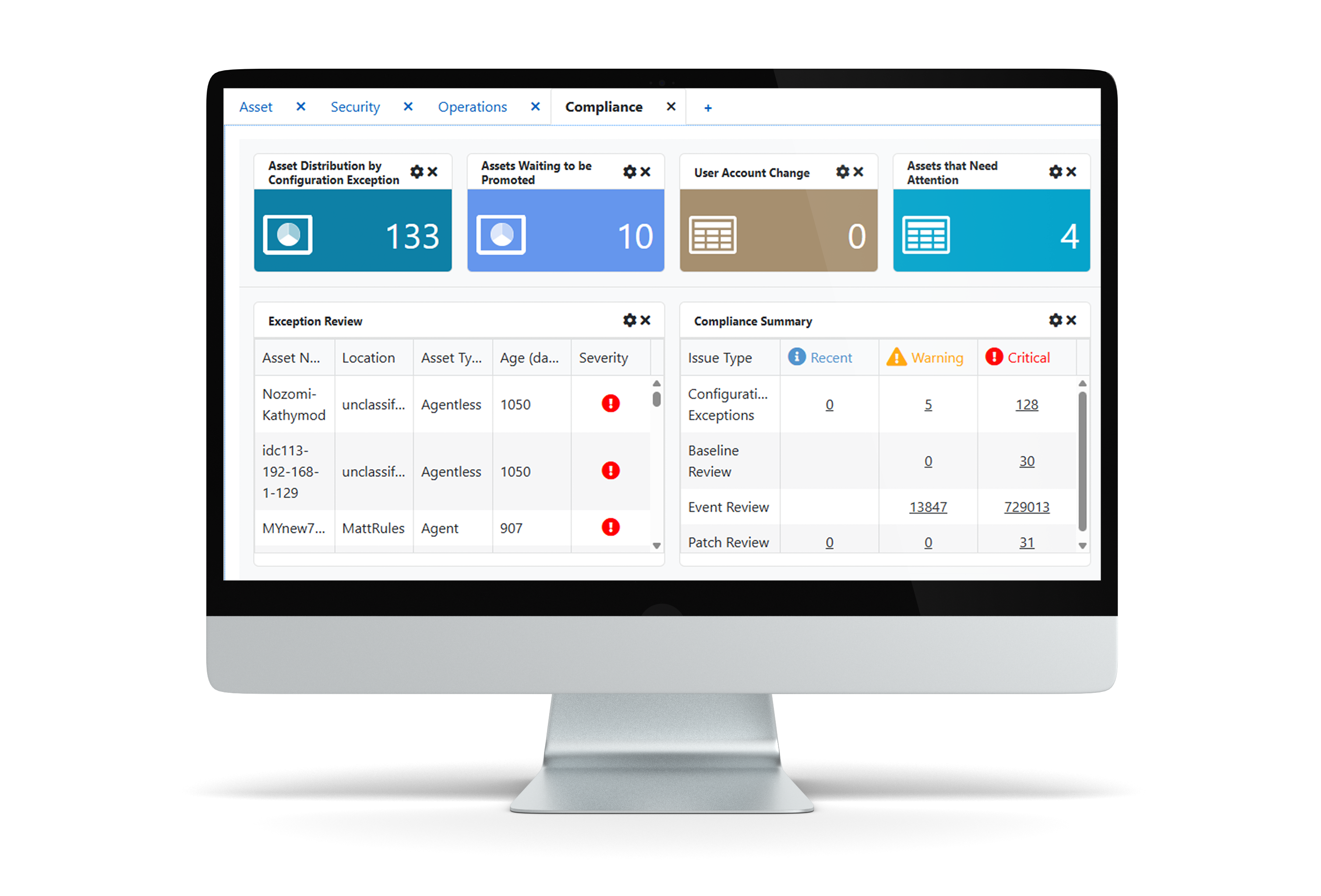
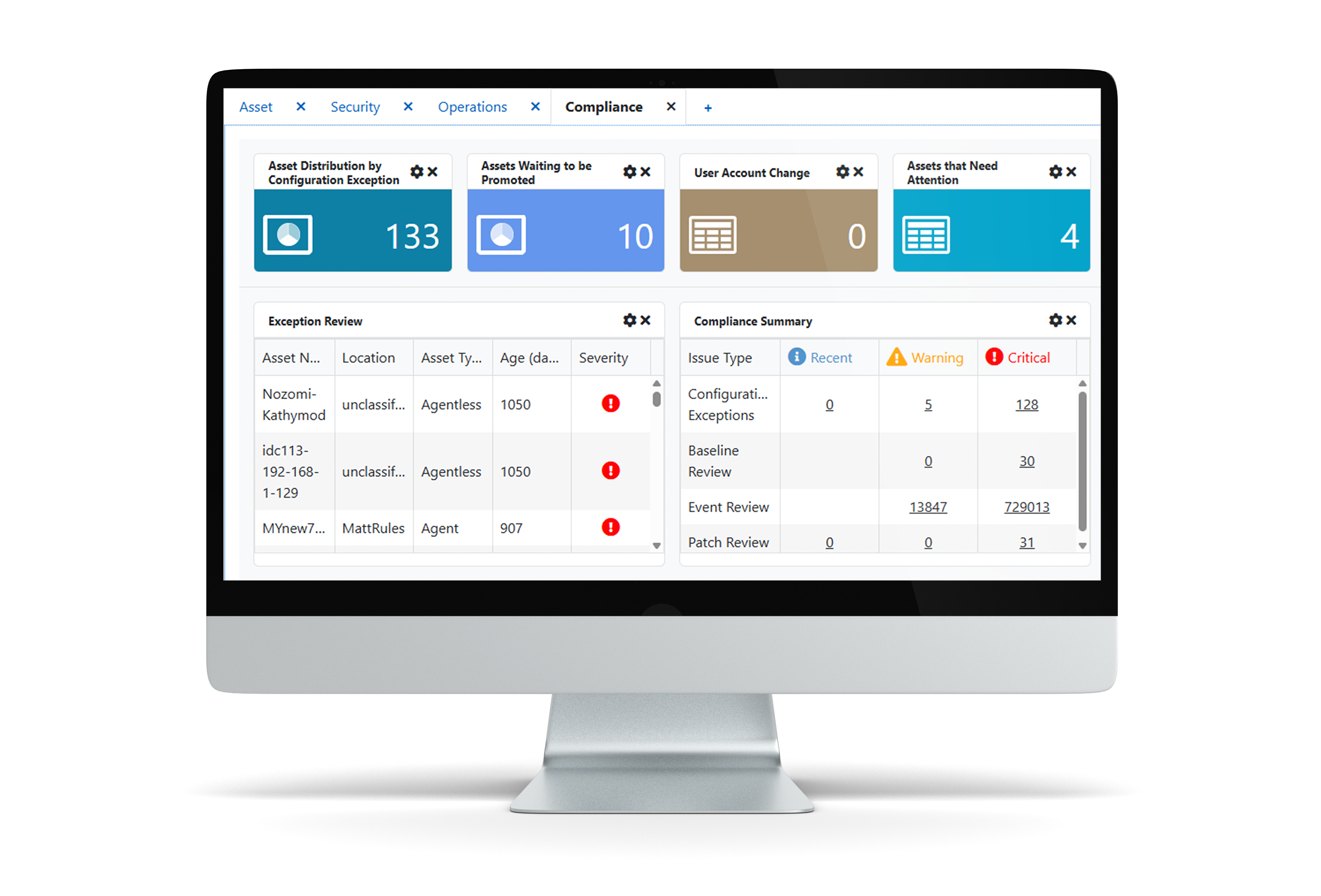
Industrial Defender's Risk Overview provides a highly scalable and configurable view of risks across your asset inventory, allowing you to quickly filter and drill into both security vulnerabilities and compliance gaps — so your team can focus on what matters most, faster.


