How one of Southern Europe's largest department store and logistics operators gained a single view of its OT environment across 90+ retail and warehouse locations — without disrupting a single operational system.
.svg)
Before Industrial Defender, we had no way of knowing what was running across our stores and warehouses. We now have a single view of our entire OT landscape — from the department store floor to warehouse automation systems — and a clear roadmap for managing firmware vulnerabilities across all of it.
A major Southern European retailer operates one of the most complex commercial environments in Europe: more than 90 retail locations, storage facilities, and large-scale logistics warehouses, some comparable to Amazon fulfillment centers in automation sophistication.
Thousands of connected devices ran quietly across siloed, segmented networks — from label printers and HVAC/R systems to warehouse PLCs running automated picking. No single team could see across them, and no unified inventory existed. Industrial Defender was brought in to deliver enterprise-wide OT asset visibility without disrupting a single operational system.

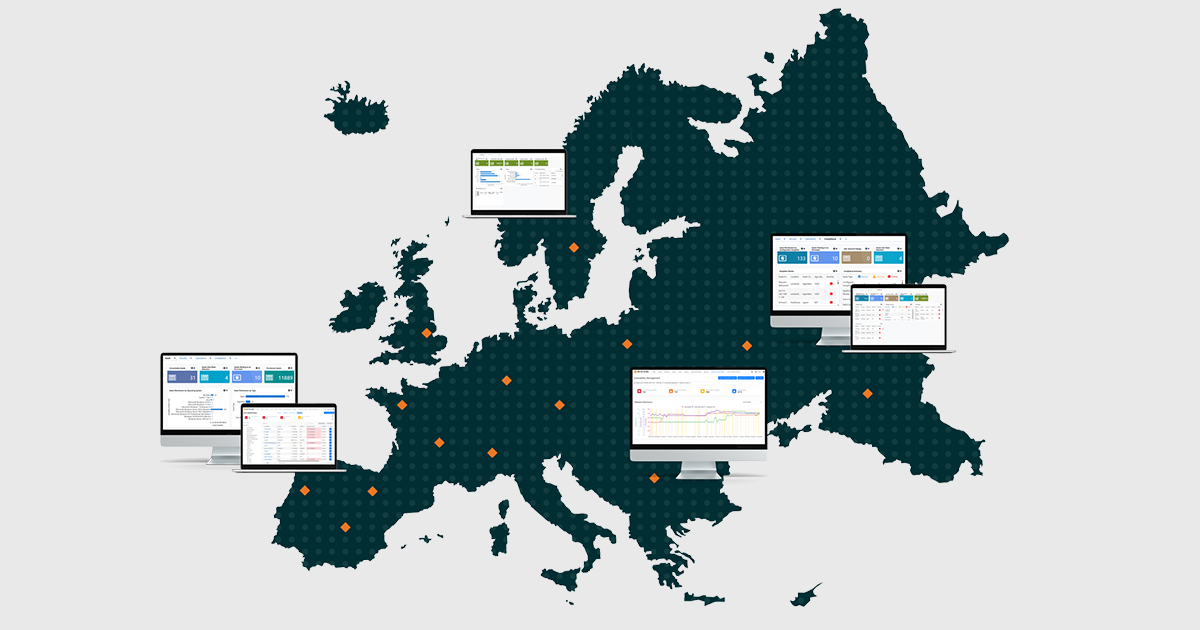
The challenge wasn't a lack of technology investment — it was a lack of visibility. HVAC controllers, refrigeration management systems, warehouse PLCs, label printers, building management systems, and networking infrastructure all operated across siloed, segmented networks with no unified inventory.
The retailer had grown rapidly across Spain and beyond, adding locations, warehouse automation, and building infrastructure faster than any manual process could track. The security function could not answer the most basic OT security question: what do we have, and is it vulnerable? That unknown was the risk.

Surface every OT asset not covered by the corporate IT security program across all 90+ locations.
Track firmware versions and cross-reference them against known vulnerabilities to report findings to management and site-level operational staff.
Execute the asset inventory within existing infrastructure, without disrupting live retail and logistics operations or relying on site-level cooperation.
The retailer selected Industrial Defender to deploy its OT asset monitoring platform across the entire estate, creating a unified, centrally managed view of the OT environment for the first time.
Industrial Defender Collectors (IDCs) were installed at each retail and warehouse site, feeding data back to the Industrial Defender Central Manager (IDCM) for a single, unified view.
Every collector monitored network traffic and delivered real-time telemetry without disrupting a single operational device — no coordination with on-site teams and no risk to live systems.
Where OT protocols were detectable on the wire, or assets broadcast via SNMP, the platform captured firmware and configuration data automatically, with no manual configuration.
Firmware versions for PLCs, controllers, and building management systems were cross-referenced against known vulnerability databases, generating exportable reports the team could distribute to site managers.
The Industrial Defender platform enables organizations to strengthen cybersecurity across multiple domains.

Together, these capabilities created a unified OT cybersecurity platform — delivering continuous visibility, automated monitoring, and audit-ready compliance across the utility's entire operational environment.
Across retail stores, warehouses, and logistics facilities — the vast majority previously untracked and unknown to the security function.
Firmware version data identified and mapped to known CVEs, creating an actionable vulnerability baseline for PLCs, building management systems, refrigeration controllers, and industrial automation equipment.
Reporting to regional management and executive leadership without on-site audits or manual data collection from individual locations.
Firmware vulnerability reports were generated and sent to operational staff at individual locations, enabling targeted remediation against a baseline that didn't exist before.
Warehouse automation PLCs, refrigeration management systems, and smart building infrastructure the security team had not known were network-connected.
The initial deployment established the foundation. With an enterprise-wide inventory in place, the retailer is positioned to activate active and agentless collection for richer firmware interrogation and patch-level CVE matching, and to scale the same platform into continuous vulnerability monitoring, configuration change detection, and compliance reporting as evolving European frameworks like NIS2 take hold.


